Key takeaways
- Aircraft category — not brand — is the main price driver: charter is quoted per flight hour, and rates climb with cabin size and range.
- A light jet covers roughly 2,000 nautical miles; an ultra-long-range jet flies 7,000+ nm non-stop; a VIP airliner carries up to 51 passengers.
- The right choice is the smallest cabin that flies your mission comfortably — unused cabin size is money spent on nothing.
- No fixed price list exists: the honest number is a firm quote for your route and dates, returned in minutes.
Search for any aircraft — "Gulfstream private jet price", "Boeing business jet charter" — and you will find plenty of numbers and very few answers. That is because charter is not priced by aircraft model but by flight hour, category, and routing. This guide walks the categories from smallest to largest, what each one actually does, and where the marquee names fit.
Turboprops and light jets — the regional workhorses
For sectors under two hours, a turboprop or light jet is usually the honest recommendation. A light jet such as an Embraer Phenom 300 seats 6 to 8 passengers and covers roughly 2,000 nautical miles — enough for most regional city pairs. The Cessna Citation family and Pilatus PC-24 live here too; the PC-24 adds short and unpaved runway capability that opens airports jets normally cannot use. Hourly rates in this class sit at the accessible end of the market.
Midsize and super-midsize — the transcontinental sweet spot
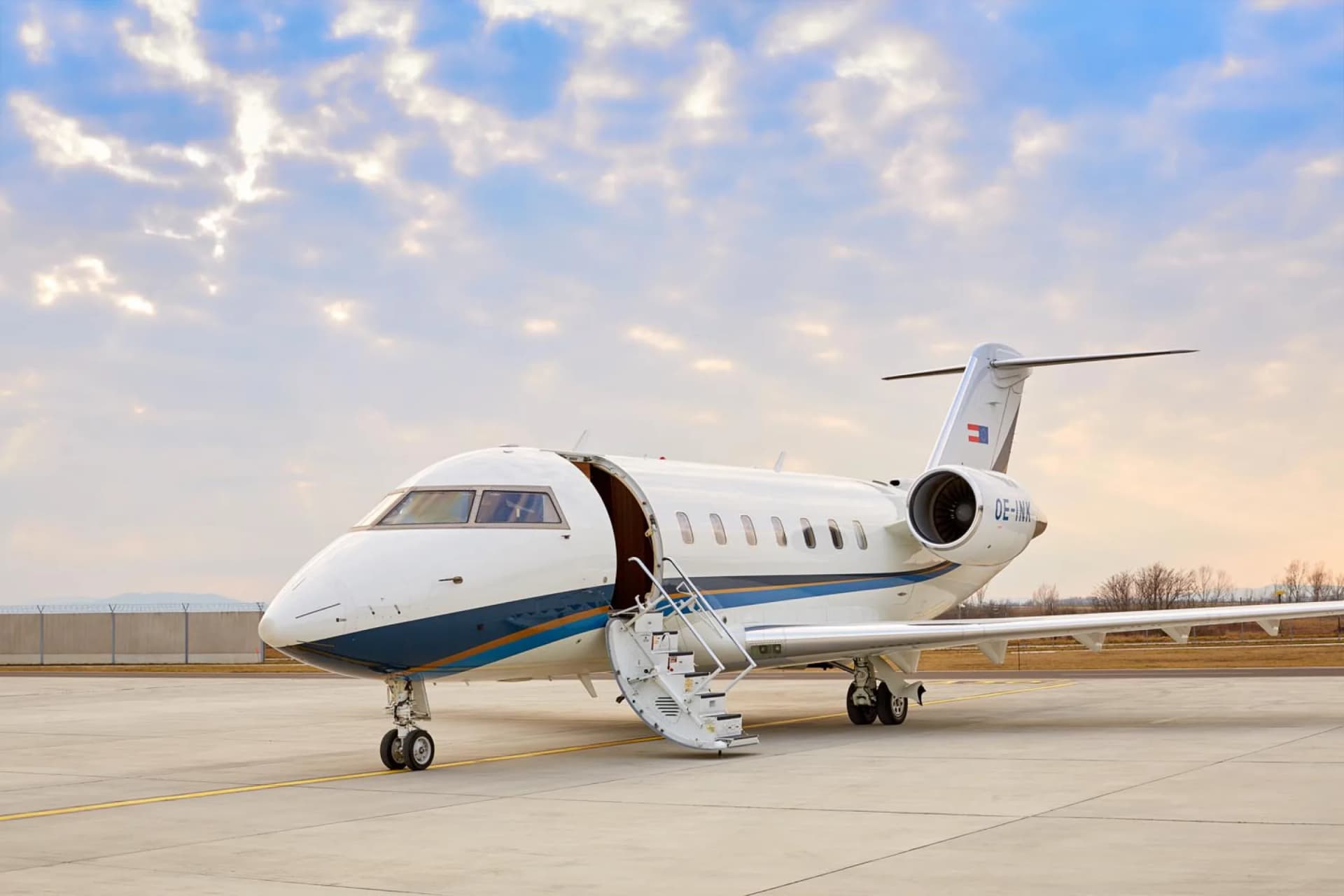
A super-midsize jet like the Bombardier Challenger 350 stretches range to around 3,200 nautical miles and adds a stand-up cabin — the point where a flight stops feeling like a car and starts feeling like a room. This class handles coast-to-coast US or intra-European missions with margin, and it is the workhorse of corporate charter: Challenger 604/605, Praetor 600, Citation Longitude all compete here.
Heavy and ultra-long-range — the ocean crossers
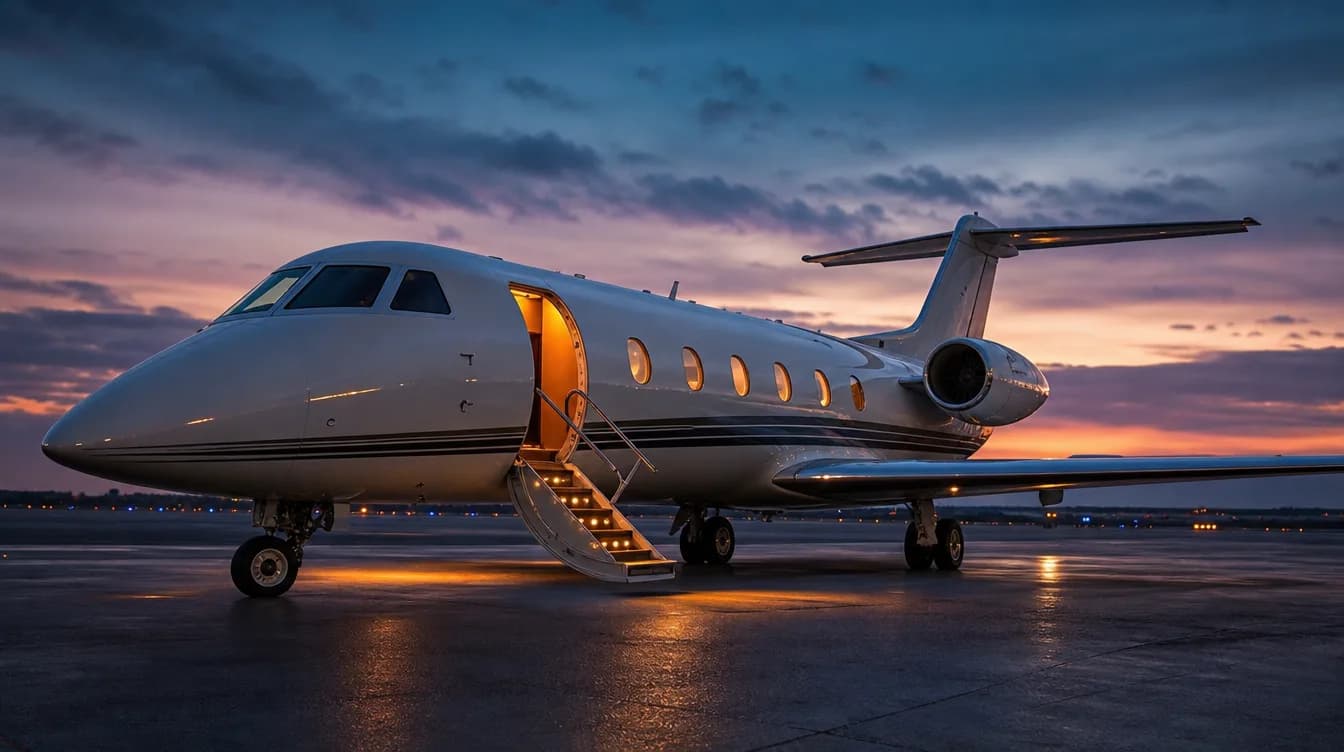
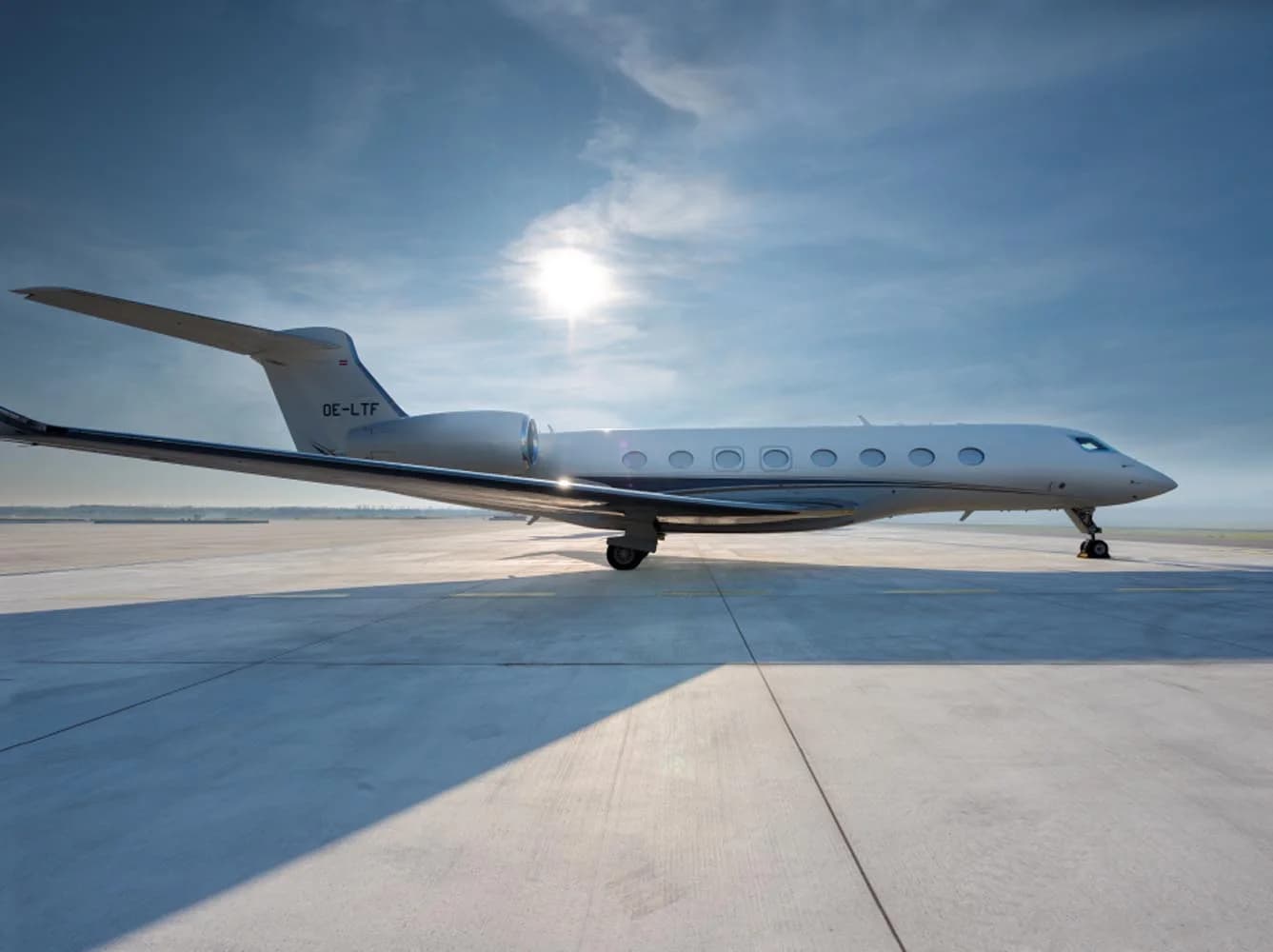
At the top of the conventional market, ultra-long-range aircraft such as the Gulfstream G650 or Bombardier Global 7500 fly 7,000 nautical miles or more nonstop — London to Tokyo or New York to Dubai within reach of a single sector. Cabins split into distinct living zones, crews are augmented for long duty days, and hourly rates are the highest in the jet market. This is also where the price-search queries concentrate — and where a fixed "Gulfstream price" is least meaningful, because routing, positioning and calendar move the total by tens of thousands.
VIP airliners — when the group is the mission
Beyond the business jet sits a separate tier: airliners completed as private aircraft. A Boeing BBJ 767 carries up to 51 passengers 6,700 nautical miles non-stop in a 177 m² cabin with private suites; an Airbus ACJ319 gives 19 passengers the widest cabin of any corporate jet. For delegations, tours and extended families they replace an entire fleet of smaller jets — often at better per-seat math. We cover this tier in depth, with downloadable fleet brochures, on our VIP airliners page.
So what does it cost?
Private jet charter is priced per flight hour, and the rate depends primarily on the aircraft category you choose. As an indicative guide, light jets sit at the lower end of the market, midsize jets in the middle, and heavy or ultra-long-range jets at the top — hourly rates can range from a few thousand dollars to well over ten thousand. Beyond the hourly rate, your final quote reflects routing, positioning, airport and handling fees, crew overnights, catering, and de-icing where relevant. Empty leg flights can cut the total substantially if your dates are flexible.
The honest answer to "how much does a private jet cost" is a firm quote for your specific route and dates. Send us the trip — our charter desk returns exact aircraft options and all-in pricing, usually within the hour.
Private Charter Global
Charter Desk
Private Charter Global writes about worldwide private jet charter platform and related topics for Private Charter Global.