Loading...
Jet Card Membership
A jet card is prepaid private flying with the variables locked down.
I.
About jet card membership
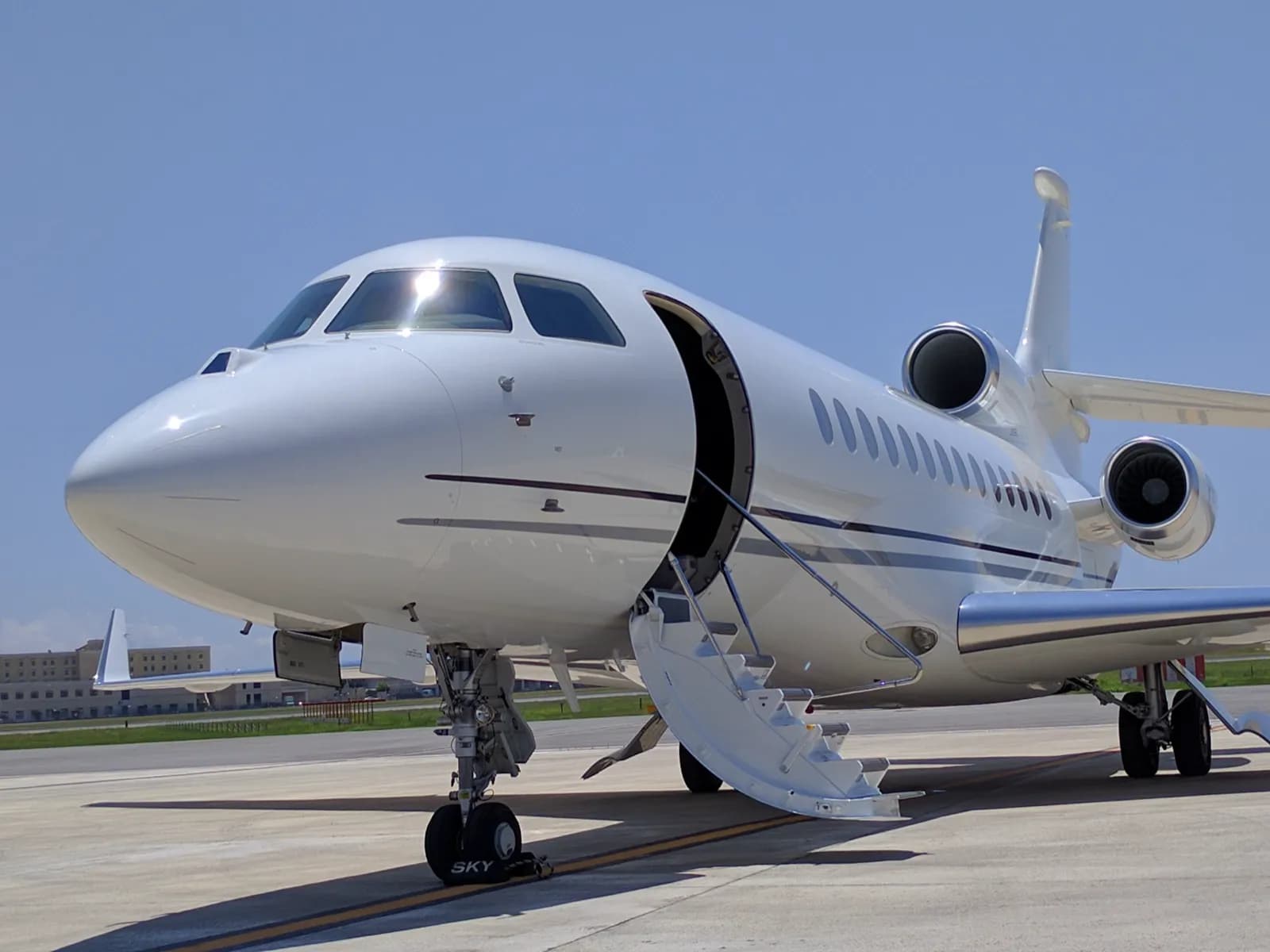
You purchase a block of hours, commonly 25 or 50, on a defined aircraft category, and in exchange the program guarantees an aircraft with as little as 8 to 24 hours' notice at a fixed hourly rate. No repositioning fees, no per-trip negotiation, no requote when demand spikes. The jet card sits between on-demand charter, where every trip is a fresh quote, and fractional ownership, where you buy into an airframe. The right customer profile is specific: 25 to 50 flying hours a year, mostly short-notice or repeat routes, and a strong preference for price certainty over trip-by-trip optimization.
A CFO who books the same city pair thirty times a year stops wanting quotes and starts wanting a rate. Below about 25 hours, on-demand charter is usually cheaper because you pay only for what you fly. Above 50 hours, fractional jet ownership begins to beat the card on effective hourly cost. We say this to every prospect because a jet card sold to the wrong profile becomes an expensive drawer ornament.
II.
How it works
Read the terms before comparing rates, because programs differ on exactly the clauses that matter. Peak day calendars can add surcharges of 10 to 40 percent on 20 to 60 days a year. Daily minimums, often 1 to 2 hours, punish short hops. Interchange rules govern what you pay to fly a category above or below your card.
Fund expiry, typically 12 to 24 months, decides whether unused hours are money lost. Our card comparisons put these four terms side by side before any hourly rate is discussed, because the rate is the headline and the terms are the price. Every flight under our card programs operates on audited aircraft under FAA Part 135 or the equivalent certificate in the departure jurisdiction, with the same ARGUS and Wyvern screening we apply to open-market charter. Guaranteed availability means the program sources a compliant aircraft even when its preferred fleet is committed; you should never hear that your card cannot fly.
III.
What to expect
If your flying pattern fits, a jet card membership turns private aviation into a utility: call, confirm, fly, and reconcile against a balance you already funded. We will model your last twelve months of trips against card, charter, and fractional pricing so the structure you pick is the one the numbers support. A jet card membership also simplifies expense handling, since one funded account replaces dozens of individual trip invoices, and a jet card statement reconciles in minutes rather than an afternoon of matching quotes to receipts.
IV.
What’s included
- —Fixed hourly rates locked at purchase, no demand-based requoting
- —Guaranteed aircraft availability on 8-24 hours' notice
- —25 and 50 hour blocks on defined aircraft categories
- —Zero repositioning fees on program flights
- —Four-clause terms comparison: peak days, daily minimums, interchange, fund expiry
- —All flights on ARGUS/Wyvern-screened Part 135 aircraft
- —Twelve-month flying-pattern model against charter and fractional before you buy
Also from us
Related services
- Private Jet Sales & AcquisitionBuying a private jet is a seven-to-nine-figure transaction conducted in an opaque market where the listed price is rarel…
- Helicopter CharterHelicopter charter solves the problem fixed-wing aircraft cannot: distance is short, the destination has no runway, or t…
- Group Charter FlightsGroup charter flights move 20 to 300+ people on one aircraft, on your schedule, to your airport.
Frequently Asked Questions
Everything you need to know about our services.
A jet card makes sense for a specific flying profile: roughly 25 to 100 hours per year, mostly on similar aircraft types, with a preference for guaranteed availability and locked-in hourly rates. You purchase a block of hours upfront, then book flights with short notice — typically as little as 24–48 hours — at a fixed rate, with no repositioning charges on qualifying routes. Compared with on-demand charter, you trade flexibility of choice for certainty of price and availability. If you fly fewer than about 25 hours a year, on-demand charter is usually cheaper because you avoid committing capital. If you fly far more, fractional ownership may beat both. We help clients compare all three models against their real flight history before recommending one.
A jet card is a prepaid charter arrangement. You buy a block of flight hours — commonly 25, 50, or 100 — in a chosen aircraft category, and those hours are drawn down as you fly. The card's terms define the guaranteed callout window (how close to departure you can book), the fixed hourly rate, the primary service area where no positioning fees apply, peak-day rules, and how long the hours remain valid. Some programs debit actual flight time; others use rounded segments, which matters for short hops. The critical step is reading the terms before comparing prices: two cards with identical hourly rates can differ enormously in peak-day surcharges, fuel adjustments, and expiry rules. We walk clients through those terms line by line, program by program.
Ready to fly?
Send us your route, dates and passenger count. We come back with a quote from vetted operators, usually within the hour.